SAN – Storage Area Network

SAN – Storage Area Network

Storage Area Networks – performance meets scalability

With our Storage Area Network (SAN) systems, we offer companies highly available, high-performance and scalable storage solutions for large data volumes. The SAN is a dedicated high-speed data network that combines different storage systems as virtual units and also enables multiple servers to access the storage capacities and functions.

NEW
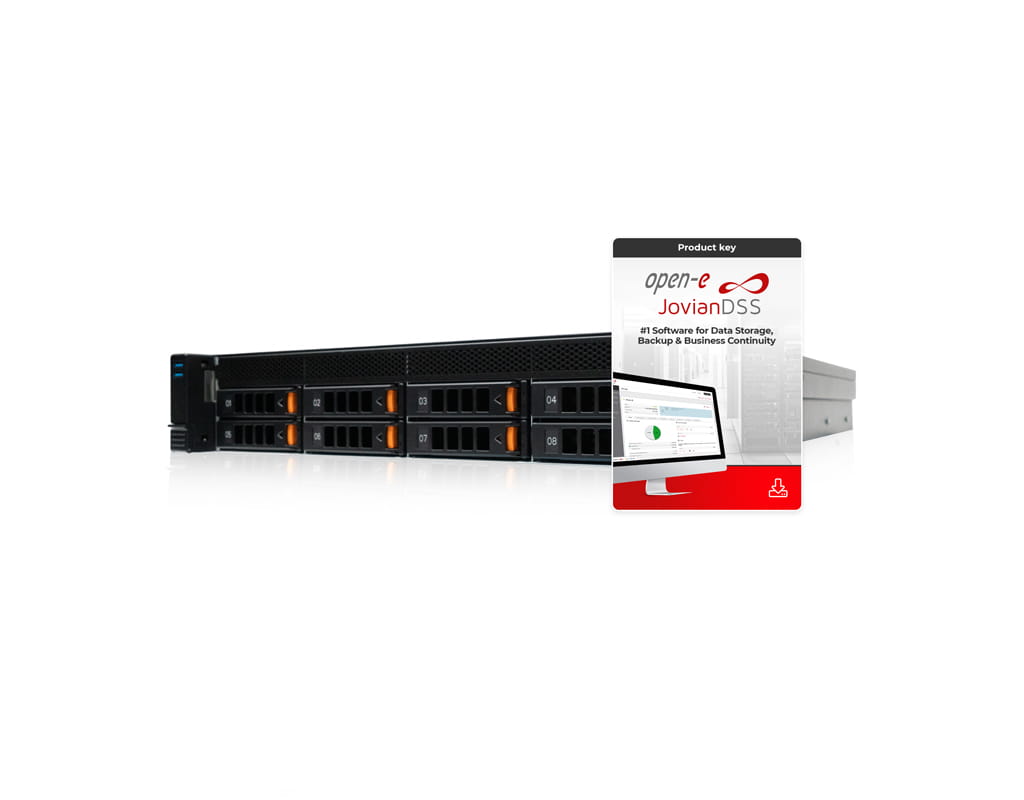
Open-E RA1208
Highlights
AMD EPYC 9005, DDR5 RDIMM, up to 8x SAS/SATA/NVMe
  • Upgradable up to:
  • 1 x AMD EPYC 9004 (Genoa)
  • AMD EPYC 9005 (Turin)
  • CPU cores: 8-16
  • 512GB RAM
  • 8x drives
  • max. 245.76 TB
  • 2x 10Gbit/s LAN (RJ45)
  • 4 Additional cards
  • red. NT
  • Price incl. 1x AMD EPYC 9015 and 16 GB RAM
starting at3.109
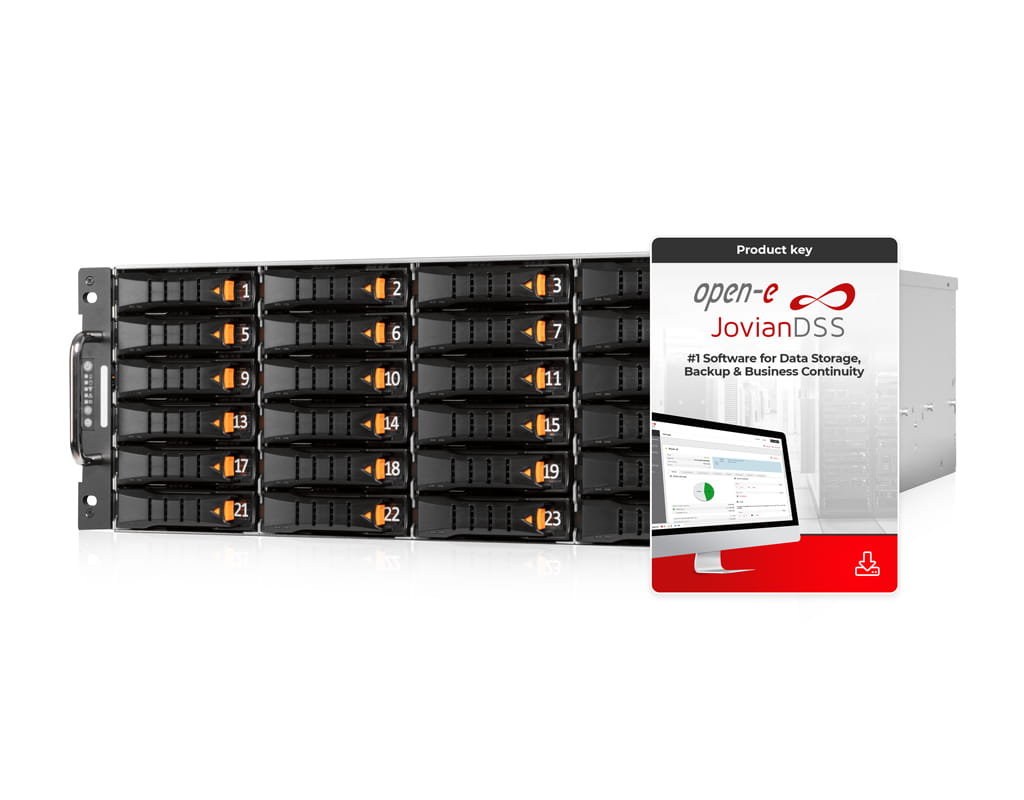
Open-E RA1112 (All-NVMe)
Highlights
AMD EPYC 9004/9005, up to 10x hot-swap NVMe data carriers
  • Optimized for:

    • Open-E JovianDSS

  • Includes:

    • 1x 240 GB SSD boot drive
    • 1x AMD EPYC 9015 (upgradeable)
    • 128 GB RAM (upgradeable)

  • Upgradeable:

    • 12x data carriers
    • 2x LP/ HL add-on card
starting at6.545
Open-E JovianDSS

Software licenses for Open-E Jovian DSS

Basic license, capacity expansions, support / renewals / reinstatements

Price on request
StorMagic SvSAN licenses
  • Cost-effective storage virtualization and high availability
  • Support for VMware vSphere and Microsoft Hyper-V hypervisors
  • Georedundant backup possible (stretched cluster)
  • Online capacity expansion through software-defined storage
Price on request

All prices are net prices and do not include statutory VAT; they are intended exclusively for entrepreneurs (Section 14 of the German Civil Code (BGB)), legal entities under public law and special funds under public law.

SAN – storage network as a common resource pool

A SAN (Storage Area Network) is a storage concept that was developed as a technological extension of DAS (Direct Attached Storage) for the high-speed transmission of large data volumes. It connects various storage media with the associated data servers. With a SAN, dedicated storage devices, e.g. hard drives from different servers, can be bundled independently of the operating system and across greater distances into a single centrally managed storage block. As a result, all of the connected servers have access to the storage network as a resource pool, allowing administrators flexible scalability and improved resource utilization. 

Structure of a SAN

A simple SAN typically consists of host bus adapters (HBAs) in the server/workstation units, network components such as switches or routers, and storage elements such as hard drives, RAID systems or tape libraries. The network-based transport protocols Fibre Channel and iSCSI have established themselves as the main protocols for a storage area network.

In contrast to NAS (Network Attached Storage) systems, which are predominantly file-based and therefore suitable as file servers, SAN is block-based. It is therefore often used for database applications or for the centralization of data storage.

Though the resource pool in the SAN is managed centrally and the storage is distributed to the respective servers via high-performance fiber optic lines according to specific requirements, building and operating a storage area network is also more complex and costly than a DAS or NAS system because of the hardware infrastructure required and the need to manage an additional infrastructure layer. In addition, administrators need the expertise to build, configure, and manage a SAN in order to be able to take full advantage of the storage area network’s day-to-day capabilities.

Do you have questions about our storage systems or need support with the design of your storage solution? Our experienced sales consultants are at your disposal to ensure the best possible compatibility within your storage area network.