GPU Server

GPU Server

More computing power with GPU systems

With increasing digitalization and the growth of data volumes, many companies are faced with the challenge of processing them efficiently and quickly. Traditional CPUs often reach their limits. With GPU computing, companies can efficiently handle demanding tasks such as deep learning, complex simulations, real-time data analysis and image processing. GPUs drastically accelerate these processes through parallel calculations. At Thomas-Krenn, we explain what makes the GPU tick and how GPU computing can take your company to the next level.

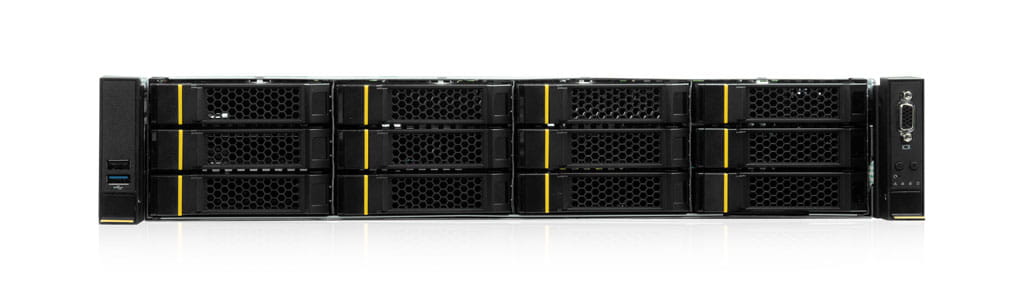
2U AMD single-CPU RA1204-AIEPG server
Highlights
1 GPU at 2U, space-saving due to 450 mm (T) installation depth
  • Upgradable up to:
  • 1x AMD EPYC 7002/7003 (Rome/Milan)
  • CPU cores: 8-64
  • 512GB RAM
  • 4x drives
  • max. 30.72 TB
  • 2x 10Gbit/s LAN (RJ45)
  • 2 Additional cards
  • red. NT
  • Price incl. 1x AMD EPYC 7252 and 16 GB RAM
starting at2.895
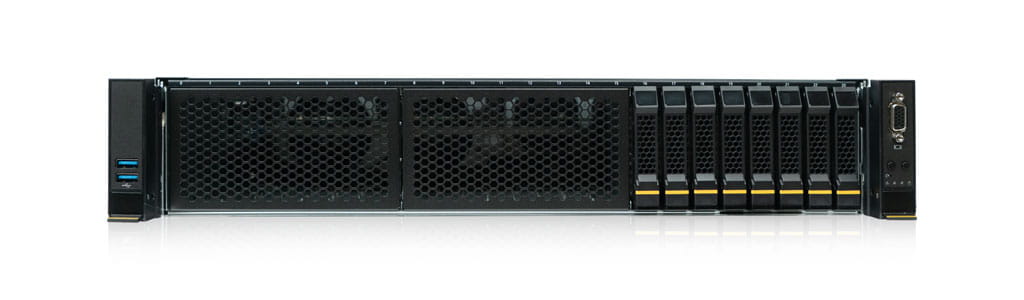
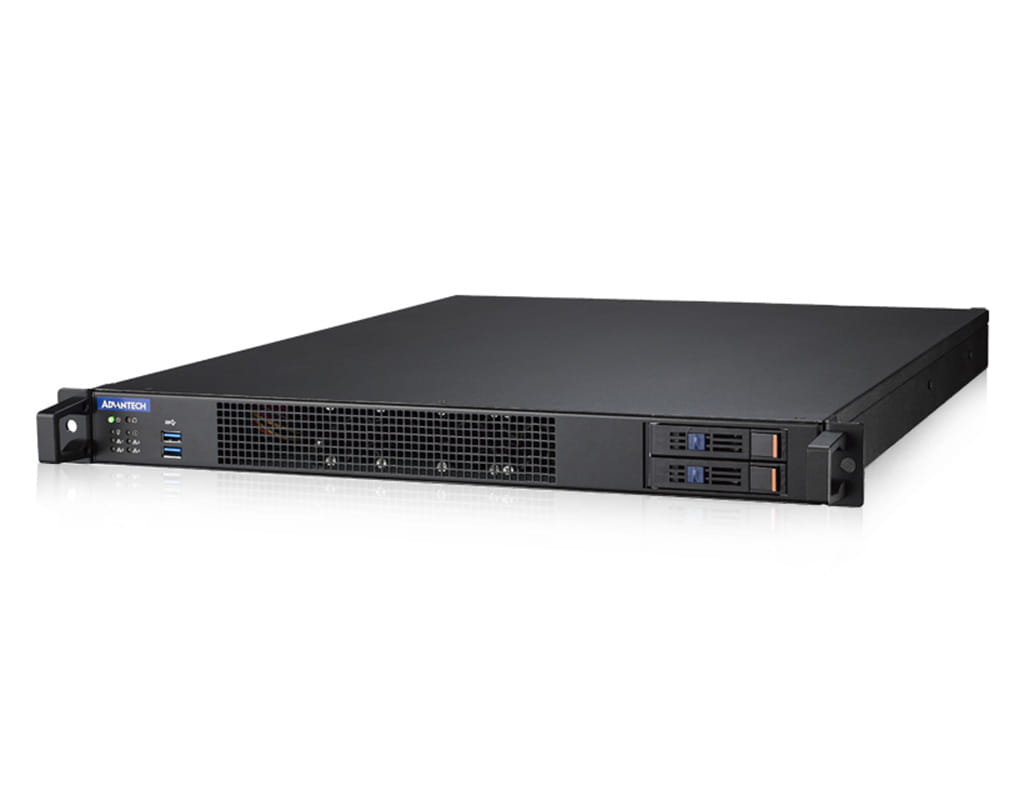
2U Intel single-CPU RI1204-AIXSG server
Highlights
1 GPU at 2U, space-saving due to 450 mm (T) installation depth
  • Upgradable up to:
  • 1x Intel Xeon Scalable 3rd Gen
  • CPU cores: 8-16
  • 512GB RAM
  • 4x drives
  • max. 30.72 TB
  • 2x 1Gbit/s
  • opt. 2x 10Gbit/s LAN
  • 2 Additional cards
  • red. NT
  • Price incl. 1x Intel Xeon Silver 4309Y and 16 GB RAM
starting at2.719
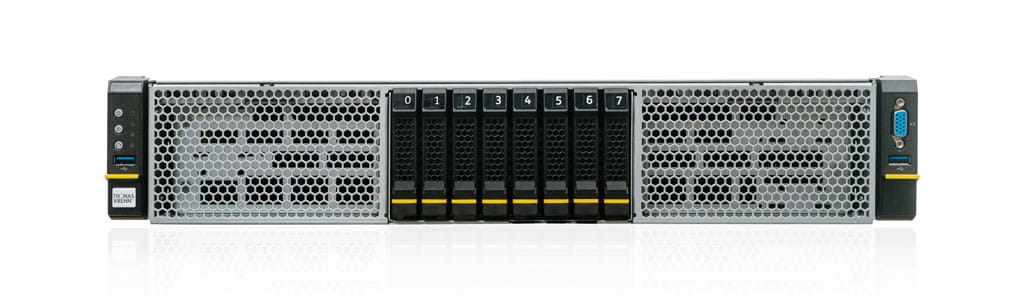
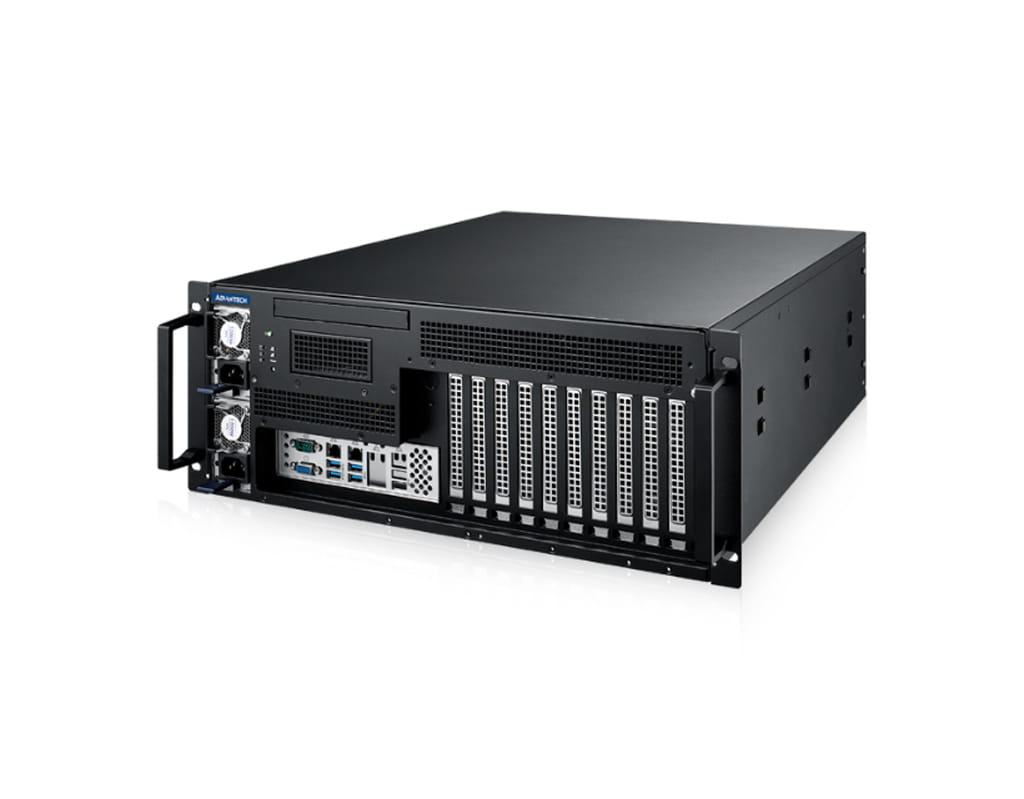
2U Intel Dual-CPU RI2208-TKXSG Server
Highlights
10x PCI-e slots
  • Upgradable up to:
  • 2 x Intel Xeon Scalable 4th/5th Gen (Sapphire/Emerald Rapids)
  • CPU cores: 8-32
  • 1.024TB RAM
  • 8x drives
  • max. 61.44 TB
  • 10 Additional cards
  • Price incl. 1x Intel Xeon Silver 4410Y and 32 GB RAM
starting at6.655
instead of9.525
HPC-6120 + ASMB-610V3
Highlights
Edge Accelerator, GPU up to 300 watts
  • Intel Core Series 2 (Bartlett Lake)
  • up to 3.6GHz (24 cores)
  • Incl. 8 GB RAM - up to 128GB RAM
  • 2x drives
  • max.
  • Price incl. Intel Core 3 201E and 8 GB RAM
starting at1.979
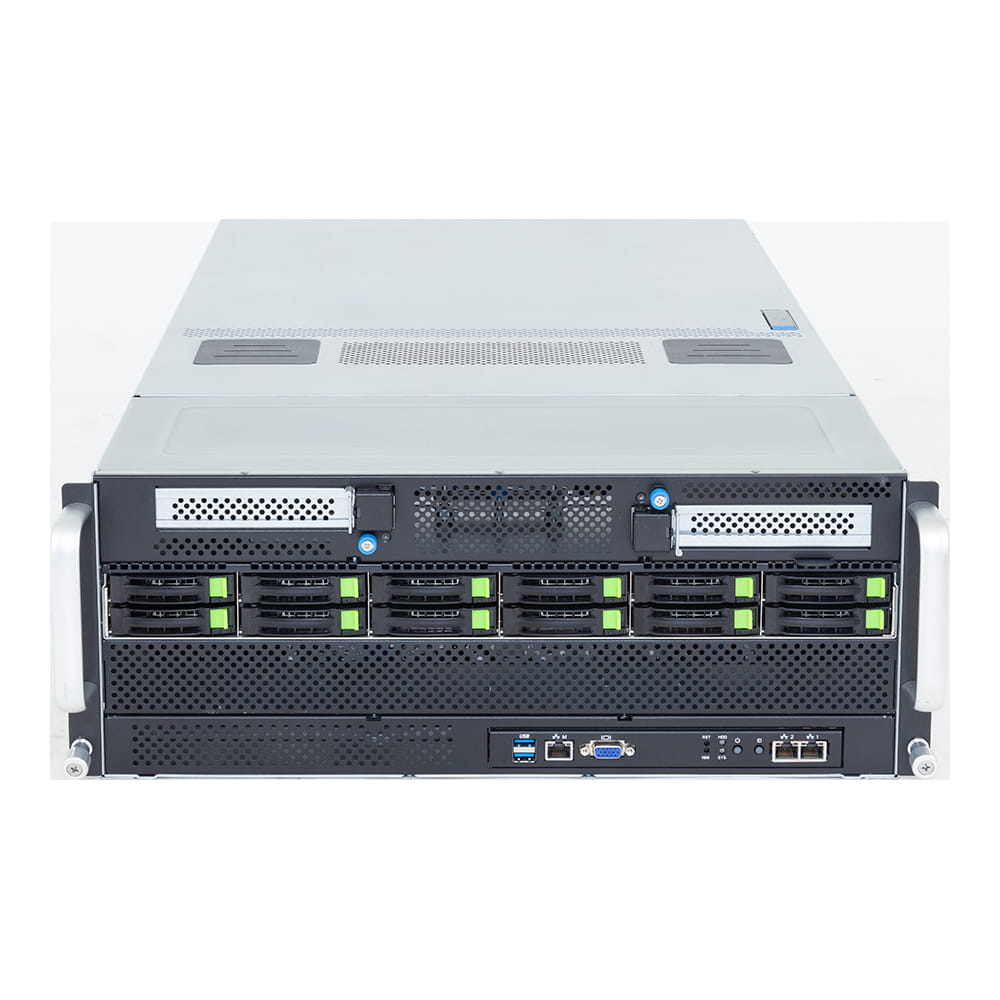
HPC-6240 + ASMB-622V3
Highlights
Up to 600 watts of GPU power, space-saving thanks to 523 mm (T) installation depth
  • Intel Xeon Scalable 4th/5th Gen (Sapphire/Emerald Rapids)
  • up to 3.9GHz (32 cores)
  • Incl. 16 GB RAM - up to 2.048TB RAM
  • 4x drives
  • max. 7.68 TB
  • 4x 1Gbit/s LAN
  • Price incl. Intel Xeon Bronze 3408U and 16 GB RAM
starting at4.885
HPC-7420 + ASMB-818
Highlights
Up to 600 watts GPU power, space-saving thanks to 450 mm (T) installation depth
  • Intel Xeon 6 (Sierra Forest / Granite Rapids)
  • up to 3.1GHz (144 cores)
  • Incl. 16 GB RAM - up to 768GB RAM
  • 4x drives
  • max. 48 TB
  • Price incl. Intel Xeon 6505P and 16 GB RAM
starting at3.075
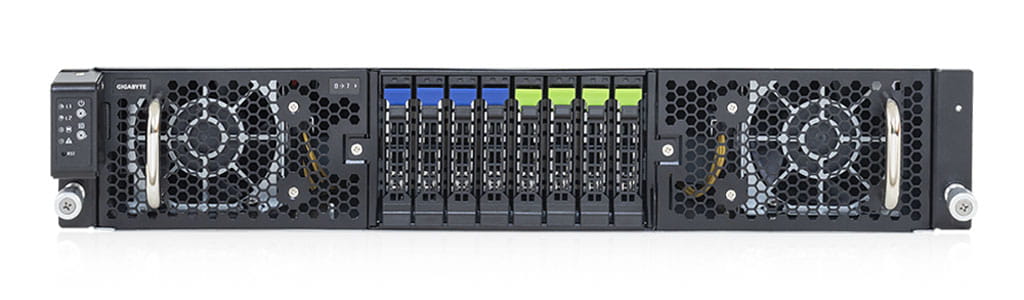
2U AMD Single-CPU RA1208-GIEPG Server
Highlights
10x PCIe slots, up to 8 GPUs at 2U
  • Upgradable up to:
  • 1 x AMD EPYC 9004 (Genoa)
  • AMD EPYC 9005 (Turin)
  • CPU cores: 8-128
  • 1.536TB RAM
  • max. 245.76 TB
  • 0 Additional cards
  • Price incl. 1x AMD EPYC 9015 and 16 GB RAM
starting at9.809

All prices are net prices and do not include statutory VAT; they are intended exclusively for entrepreneurs (Section 14 of the German Civil Code (BGB)), legal entities under public law and special funds under public law.

What is GPU computing?

GPU computing refers to the use of graphics processing units (GPUs) for tasks that go beyond traditional graphics processing, such as complex calculations and data processing tasks. Originally developed for the acceleration of graphics displays in games and applications, GPUs have proven to be extremely powerful when handling parallel processes.

Unlike the CPU (Central Processing Unit), which is optimized for general purposes and processes a large number of tasks serially, GPUs are designed to perform many simple calculations simultaneously. A GPU consists of thousands of smaller cores that work together to process massive amounts of data in parallel. This architecture makes them particularly efficient for computationally intensive applications where large amounts of data need to be processed simultaneously.

This is particularly beneficial in areas such as scientific simulations where precise and extensive calculations are required. Artificial intelligence and machine learning also benefit enormously from GPU computing, as the training processes for neural networks that run through huge amounts of data are significantly accelerated. In data analysis, GPU computing also enables faster processing and evaluation of big data, which is essential for real-time analysis and time-critical decisions.

By utilizing the parallel processing capabilities of GPUs, companies and research institutions can process large amounts of data much faster and solve complex problems in less time. This not only leads to more efficient workflows, but also to faster innovation cycles and better results in a variety of application areas.

The advantages of GPU computing

GPU computing offers numerous advantages that make it particularly attractive for modern applications.

One of the biggest advantages is the high computing power of GPUs, which can perform many parallel calculations simultaneously. While conventional CPUs are optimized for serial processing tasks, GPUs run thousands of cores in parallel, enabling massive parallel processing. This capability is ideal for scientific simulations that require accurate and extensive calculations.
The efficiency and speed of GPU systems significantly reduces the processing time of large amounts of data. This is particularly important in areas where quick decisions have to be made based on large amounts of data, such as in real-time data analysis. This acceleration of processing leads to faster innovation cycles, as new models and applications can be developed and tested more quickly.
Another advantage of GPU computing is its high scalability. Companies can flexibly adapt their computing capacities by adding or removing more GPUs as required. This enables optimal use of resources and avoids unnecessary costs.
Despite the higher acquisition costs for GPUs compared to CPUs, their efficiency results in lower operating costs. GPUs save time and energy by completing compute-intensive tasks faster and with fewer resources. This means that companies reduce their operating costs while improving the performance of their applications.
Overall, these advantages make GPU computing a powerful solution for modern applications that require high computing capacities and fast processing times. Whether in artificial intelligence, scientific computing or data analytics – GPUs provide the performance and flexibility needed to meet the demands of today's technology and data landscape.

Use of GPU computing

For a powerful GPU system, you also need a powerful server, because the power consumption and waste heat of GPUs are often many times higher than with standard systems. If you would like advice on this, please contact us.

With the right hardware, GPUs have a wide range of applications that go beyond pure graphics processing. In various industries and applications, GPUs help to speed up processes and handle complex tasks. We have listed a few examples for you here:

  • Artificial intelligence (AI) and machine learning: training and inference of deep learning models; image recognition, speech processing and autonomous driving; real-time rendering of VR and AR content
  • Data analysis and big data: real-time data analysis and processing; data mining and predictive analytics
  • Media and entertainment: video editing and rendering, animation and visual effects in movies and games
  • Engineering and manufacturing: CAD (computer-aided design) and CAM (computer-aided manufacturing); simulation and modeling of products

GPU computing in the future

GPU computing supports a wide range of applications, including machine learning, artificial intelligence, data analysis, image and video processing and scientific computing. GPUs handle large amounts of data and complex algorithms particularly effectively, making them ideal for big data applications and data-intensive research projects. Without GPUs, innovations in artificial intelligence in recent years would not have been possible. Providers ensure that GPUs can be integrated very easily and rely on the computing power of graphics cards. Manufacturers such as NVIDIA and AMD are now even developing special GPUs whose primary task is no longer graphics output, but which are used purely for parallelized processing of large amounts of data, such as the Tesla GPUs from NVIDIA and their successors, some of which have over 5,000 processors in one unit.

NVIDIA and GPU computing - a webinar

Join NVIDIA speaker Daniela Marggraf for a webinar to learn how NVIDIA's data center solutions can transform your data center strategy. The webinar lasts approximately 45 minutes and covers the following topics:

Agenda:

  • NVIDIA Datacenter Solutions - Overview and Vision
  • GPU accelerated desktop solutions: Win10 as a driver for GPUs in the data center
  • Customer examples
  • Artificial intelligence: Definition
  • Areas of application for artificial intelligence
  • Customer examples
  • First steps in the field of AI
Play video
6/27/2018: NVIDIA’s data center solutions and how they will change your data center strategy